
Sand Tray Therapy & Play Therapy in Galloway, NJ
Helping Children Understand Their Feelings, Build Confidence, and Navigate Big Emotions

Linda Schuler, LPC - Play Therapist in Galloway, New Jersey
Sometimes children experience feelings and challenges they don't yet have the words to explain. They may become more anxious, have difficulty managing frustration, struggle with friendships, act out at home or school, or seem withdrawn in ways that are concerning to their parents.
As a parent, it can be difficult to know what your child needs or how to help them feel better.
At A Better Life Therapy, we offer play therapy and sand tray therapy for children ages 5 and older in Galloway, New Jersey, providing a supportive, developmentally appropriate space where children can explore their feelings, express themselves, and develop skills for navigating life's challenges.
Through play, creativity, conversation, mindfulness, and therapeutic connection, children can begin to better understand themselves and learn new ways of responding to difficult emotions and experiences.
We also believe that children don't exist in isolation. Our therapists work alongside parents and caregivers to help families better understand what their child is experiencing and create meaningful changes that extend beyond the therapy room.
In-person appointments in Galloway, NJ and telehealth options are available.
Contact A Better Life Therapy: 267-838-0066 | info@abetterlifetherapy.com
What Is Play Therapy?
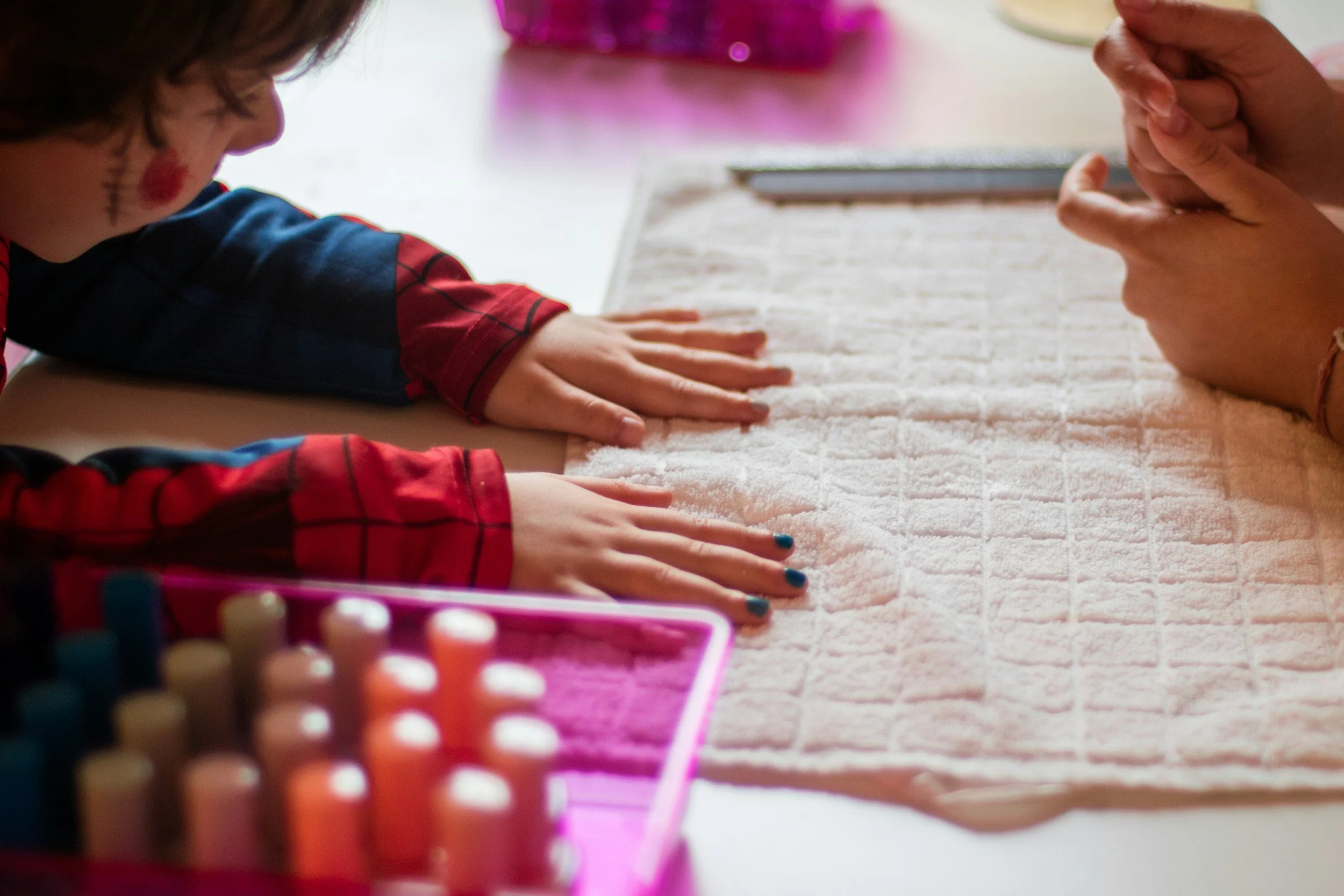
Children don't always communicate their thoughts and feelings through conversation. In fact, many children are still developing the language, emotional awareness, and abstract thinking skills needed to explain what's happening inside them. Play therapy recognizes that play is one of the primary ways children communicate, explore their experiences, and make sense of the world around them.
Rather than expecting a child to sit down and talk about everything that is bothering them, a play therapist uses developmentally appropriate activities to help children express themselves in ways that feel natural.
Depending on the child's needs and interests, sessions may incorporate:
Imaginative play, toys, and storytelling
Drawing, art, and other creative activities
Games and activities that encourage emotional awareness
Movement and sensory-based experiences
Sand tray therapy and miniature figures
Mindfulness, breathing, and relaxation exercises
Conversation and age-appropriate skill building
Play therapy is not simply unstructured play. It is a therapeutic approach in which the clinician uses the child's play, interactions, and experiences to better understand their emotional world and support therapeutic goals.
For some children, play creates an opportunity to express something they cannot yet put into words. For others, it provides a comfortable way to practice problem-solving, develop confidence, and learn how to navigate challenging situations.
What Is Sand Tray Therapy?
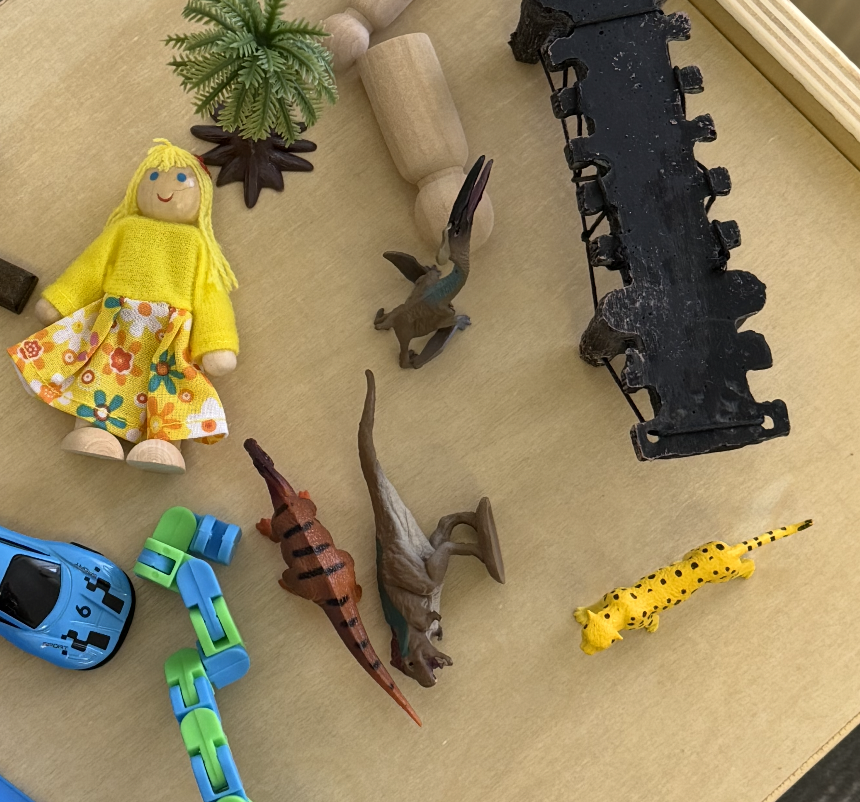
Sand tray therapy is a creative, expressive approach that allows children to communicate through the use of sand, miniature figures, and objects.
During a session, a child is invited to create a scene in a tray of sand using small figures, animals, people, buildings, natural objects, and other miniature items. They might create an imaginary world, tell a story, represent something happening in their life, or simply explore what feels interesting to them.
There are many ways that a child might use the sand tray - and the therapist gets to enter their world through the use of their unique imagination, communication, and play.
The experience gives children an opportunity to express thoughts, feelings, and experiences without having to explain everything verbally. Their therapist can observe, engage with their process, and gently invite reflection when appropriate.
How Can Sand Tray Therapy Help Children?
Sand tray therapy can be particularly helpful for children who:
Have difficulty identifying or communicating their feelings
Experience anxiety, worry, or overwhelm
Are navigating grief, loss, or family changes
Have experienced stressful or difficult events
Struggle with emotional regulation or frustration
Have difficulty expressing themselves through traditional conversation
Benefit from creative, sensory, and hands-on activities
Are working through social or relationship challenges
Sand tray therapy does not require a child to have experienced trauma or to have a particular diagnosis. It can be a helpful way to explore emotions, develop self-awareness, and support personal growth.
Importantly, therapists do not assume that every figure or object has a fixed meaning. The child's own perspective and experience guide the process.
What Concerns Can Play Therapy and Sand Tray Therapy Help With?
Children can benefit from therapy for many different reasons. Sometimes there is a specific event or challenge that has prompted parents to seek support. Other times, parents simply notice that their child seems to be struggling and want to better understand what is happening. At A Better Life Therapy, we work with children ages 5 and older experiencing a range of emotional, behavioral, social, and developmental challenges.
Anxiety and Worry
Some children experience persistent worries, fears, separation anxiety, perfectionism, or difficulty managing uncertainty. Play therapy can help children explore their worries while developing coping skills and a greater sense of confidence.
Big Feelings and Emotional Regulation
Children may experience emotions intensely without knowing what to do with them. Anger, frustration, sadness, and overwhelm can sometimes show up as tantrums, withdrawal, irritability, or difficulty transitioning between activities.
Therapy can help children recognize their emotional experiences, understand what triggers them, and develop tools for responding to big feelings.
Behavioral Challenges
Changes in behavior are often a sign that something is happening beneath the surface. Rather than focusing only on stopping a behavior, we work to understand what may be contributing to it and help children develop more effective ways of communicating their needs.
Social Skills and Friendship Difficulties
Making friends, navigating peer relationships, managing conflict, and feeling comfortable in social situations can be challenging for some children. Therapy can provide opportunities to explore these experiences, practice new skills, and build confidence.
Grief, Loss, and Family Changes
Children may have difficulty processing the death of a loved one, parental separation or divorce, a move, a change in family structure, or another significant life transition. Play and sand tray therapy can provide developmentally appropriate ways to explore these experiences.
Self-Esteem and Confidence
Some children struggle with self-doubt, feeling different from their peers, or believing they aren't good enough. Therapy can help children better understand their strengths, develop self-compassion, and feel more comfortable being themselves.
Stressful or Difficult Experiences
Children who have experienced frightening, confusing, or stressful events may benefit from having a safe relationship in which they can process their experiences at their own pace. Play-based approaches can be incorporated into a broader treatment plan when clinically appropriate.
A Different Approach to Child Therapy: Understanding How Children Learn, Feel, and Grow
At A Better Life Therapy, we believe effective child therapy involves more than identifying a problem and trying to make it go away. It involves understanding the child as a whole person.
Children have different developmental needs, personalities, learning styles, and ways of experiencing the world. A therapeutic approach that works for one child may not feel comfortable or effective for another.
This is why we value approaches that allow children to explore, create, move, reflect, and learn in ways that are appropriate for their developmental stage.

Meet Linda Schuler, LPC
Linda Schuler is a therapist at A Better Life Therapy's Galloway, New Jersey office who works with children ages 5 and older and their families.
Linda brings together clinical training in play therapy and sand tray therapy with a unique background in Montessori education and mindfulness-based practices.
As a former Montessori educator, Linda spent years working directly with children and developing an understanding of how they learn, communicate, explore, and make sense of their experiences. She recognizes that children are individuals with their own personalities, strengths, sensitivities, and developmental needs.
Her therapeutic approach is gentle, child-centered, and educational. She incorporates play, creative expression, mindfulness, movement, and conversation to help children better understand their feelings and develop tools for managing life's challenges.
Linda also believes parents are an important part of the therapeutic process. She values helping caregivers understand their child's experiences and providing guidance that can support emotional growth outside of therapy sessions.
Her goal is to create a space where children feel comfortable being themselves while helping families feel more connected, supported, and equipped to navigate challenges together.
Here is what makes working with Linda unique:
The Importance of Montessori-Informed Experience
In addition to her clinical training, Linda is a former Montessori educator. Her years of experience working with children in an educational setting have given her an understanding of how children learn, process information, develop independence, and interact with their environments.
The Montessori philosophy emphasizes respecting each child's individual developmental journey, recognizing their interests and strengths, and creating opportunities for exploration and growth.
This perspective naturally complements play therapy. Rather than expecting every child to engage in the same way, Linda brings an appreciation for each child's unique way of learning and communicating.
Building Mindfulness and Coping Skills
Linda is also a mindfulness-based practitioner with experience teaching children practical tools for managing stress and navigating difficult emotions.
Depending on the child's needs, therapy may incorporate skills such as:
Belly breathing and other calming breathing techniques
Mindfulness and present-moment awareness
Recognizing physical signs of stress and emotion
Grounding exercises
Identifying and naming feelings
Developing strategies for managing frustration
Learning how to pause before reacting
Building self-awareness and confidence
These are skills children can begin practicing not only in the therapy room but also at home, at school, and in their everyday relationships.
The goal is not to teach children to avoid difficult feelings. It is to help them understand that feelings are normal, learn how to respond to them, and develop confidence in their ability to navigate challenging moments.
We Believe Child Therapy Should Include the Family
One of the things that makes A Better Life Therapy different is our philosophy that we are a family practice for mental health.
Children are deeply influenced by their relationships, home environments, school experiences, and family dynamics. While individual child therapy can be valuable, we also recognize that lasting progress often involves helping the adults in a child's life understand what is happening and how they can provide support.
This doesn't mean parents are responsible for everything their child is experiencing. It means that children benefit when the important people in their lives have the tools and understanding to support them.
Depending on the family's needs, treatment may include:
Parent or caregiver consultation
Parent participation in portions of a child's therapy
Guidance on responding to emotional and behavioral challenges
Family therapy to address communication or relationship patterns
Individual therapy for a parent who is experiencing their own stress or emotional challenges
Coordination of care and recommendations for additional support when appropriate
Sometimes a child needs individual therapy. Sometimes the family could benefit from working together. Sometimes a parent needs their own space to receive support.
Because A Better Life Therapy offers a range of mental health services under one practice, families don't necessarily need to start over somewhere else when their needs change. We can help determine what type of support may be most appropriate and explore options within our practice.
Our goal is to support the well-being of the whole family, not just the symptoms that initially brought you to therapy.
What to Expect When Your Child Starts Play Therapy
We understand that starting therapy can feel like a big step, especially if your child is unsure about meeting with someone new. Our goal is to make the process comfortable, collaborative, and developmentally appropriate. Here is some of what you can expect:
1. Getting to Know Your Family
The first step is learning about your child and what has brought you to therapy. The therapist will want to understand your concerns, your child's developmental history, family relationships, strengths, and any changes or challenges you have noticed.
An initial parent or caregiver meeting may take place before the child begins participating in sessions.
2. Helping Your Child Feel Comfortable
Building a trusting therapeutic relationship takes time. Your child will have an opportunity to become familiar with the therapist and explore activities that feel comfortable and engaging.
We don't expect children to immediately open up, talk about difficult experiences, or participate in activities they aren't ready for.
3. Exploring Feelings Through Play and Creativity
As therapy progresses, the clinician may incorporate play, sand tray activities, storytelling, art, games, mindfulness, and conversation based on your child's needs and treatment goals.
The therapist will adapt the approach as your child grows more comfortable and their needs become clearer.
4. Supporting Parents Along the Way
Parent involvement is an important part of our approach. Your therapist can provide opportunities to discuss progress, explore patterns, and identify practical ways to support your child at home.
The specific level of parent involvement will depend on your child's age, needs, treatment goals, and appropriate privacy considerations.
5. Building Skills That Extend Beyond Therapy
Over time, the goal is for children to develop a better understanding of their emotions, build confidence, strengthen coping skills, and feel more capable of navigating challenges in their everyday lives.
Progress looks different for every child, and therapy is adjusted as those needs change.
Play Therapy and Sand Tray Therapy in Galloway, NJ
A Better Life Therapy offers play therapy and sand tray therapy for children ages 5 and older at our Galloway, New Jersey office.
Our location provides a welcoming setting for children and families seeking mental health support in Atlantic County and surrounding South Jersey communities.
Galloway Office:
A Better Life Therapy – Jersey Shore
634 E Lost Pine Way Rd
Galloway, NJ 08205
We welcome families from Galloway, Egg Harbor Township, Absecon, Port Republic, Smithville, Mays Landing, Northfield, Linwood, Somers Point, and the surrounding Jersey Shore communities.
In-Person and Telehealth Appointments
We offer in-person therapy at our Galloway office as well as telehealth appointments when clinically appropriate.
In-person sessions may be particularly useful for children participating in sand tray therapy and other hands-on play-based activities. Telehealth can provide another option for families who need flexibility or prefer to receive care from home. The therapist will help determine which format is appropriate for your child's needs and treatment goals.
Frequently Asked Questions About Play Therapy and Sand Tray Therapy
What age can children start play therapy?
Our play therapy and sand tray therapy services in Galloway are available for children ages 5 and older. The therapist adapts activities and treatment approaches to the child's developmental stage, communication style, and individual needs.
Does my child need to have a mental health diagnosis?
No. Families seek child therapy for many reasons, and a formal diagnosis is not required to explore whether therapy might be helpful. You may simply notice that your child seems more anxious, withdrawn, frustrated, or overwhelmed than usual.
What is the difference between play therapy and sand tray therapy?
Play therapy is a broader therapeutic approach that uses play, creativity, games, storytelling, and other developmentally appropriate activities to help children express themselves and work through challenges.
Sand tray therapy is a more specific expressive approach that uses sand and miniature figures to allow children to create scenes and explore experiences visually and symbolically. Sand tray therapy can be incorporated into play therapy.
Does sand tray therapy mean my child has experienced trauma?
No. Sand tray therapy can be used for many reasons, including emotional expression, anxiety, self-awareness, family transitions, and personal growth. It is not exclusively a trauma treatment.
Do parents participate in play therapy?
Parent involvement is an important part of our family-centered approach. Depending on the child's needs, parents may participate in initial meetings, periodic consultations, portions of treatment, or family therapy sessions. The therapist will discuss the best approach with you.
What if my child doesn't like talking about their feelings?
That's one of the reasons play therapy can be helpful. Children aren't expected to communicate exclusively through conversation. Play, creativity, storytelling, and sand tray activities can offer other ways to explore and express experiences.
Can play therapy help with behavioral problems?
Yes. Therapy can help explore what may be contributing to behavioral challenges while helping children develop emotional awareness, communication skills, and more effective coping strategies. Parent involvement can also help families identify ways to support positive changes at home.
Do you offer online play therapy?
We offer telehealth for children and families when clinically appropriate. Some hands-on interventions, particularly traditional sand tray activities, are better suited to in-person sessions. Your therapist can help determine which format makes sense for your child.
Where can I find sand tray therapy near Galloway, NJ?
A Better Life Therapy offers play therapy and sand tray therapy for children ages 5 and older at our Galloway, New Jersey office. We serve families throughout Atlantic County and surrounding South Jersey communities, with telehealth options available when appropriate.
You Don't Have to Figure It Out Alone
If you've noticed that your child is struggling, you don't have to wait until things become overwhelming to seek support.
Whether your child is experiencing anxiety, having difficulty managing big emotions, navigating a family transition, or simply needs a little extra help understanding themselves, play therapy and sand tray therapy can provide a supportive place to begin.
At A Better Life Therapy, we believe children deserve to feel understood, supported, and confident in who they are. We also believe parents deserve guidance and support along the way.
Contact A Better Life Therapy to learn more about play therapy and sand tray therapy in Galloway, NJ.
We would be happy to learn a little about your child and help you determine whether our services may be a good fit.
A Better Life Therapy
Galloway, New Jersey
Phone: 267-838-0066
Email: Info@abetterlifetherapy.com
In-person and telehealth appointments available.
Phone: 267-838-0066
Email: joe@abetterlifetherapy.com